Wednesday, May 1, 2019

http://bit.ly/2d4kg1q

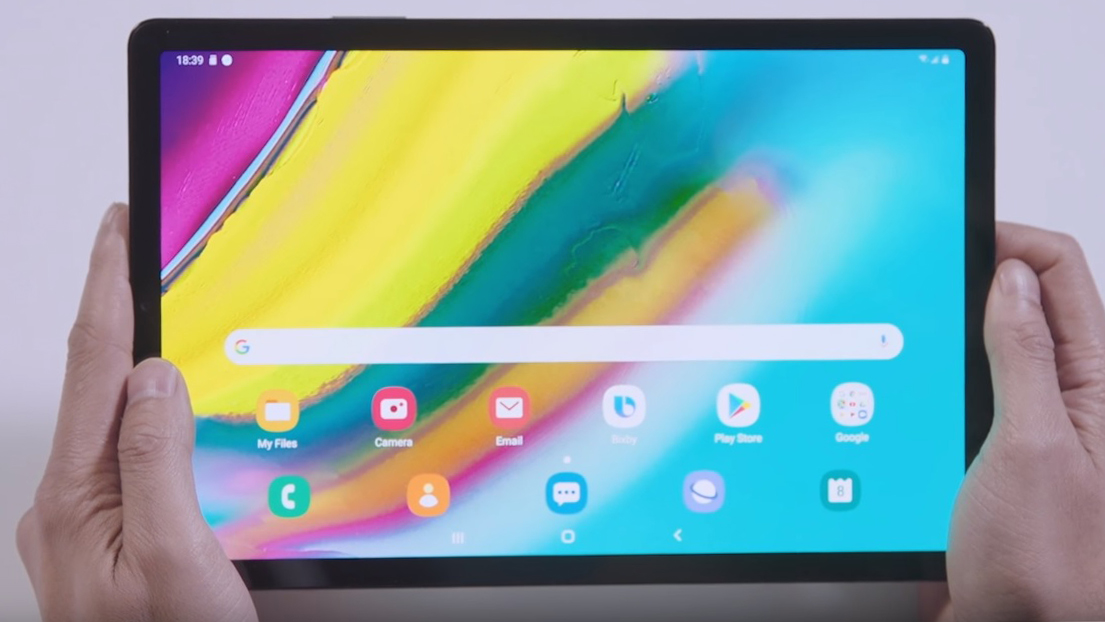
Two hands holding the new Samsung Galaxy Tab S5e tablet.

The recently released Samsung Galaxy Tab S5e is a good-looking mid-range tablet that ships with Android 9 Pie. However, consumers are discovering a pretty big flaw by literally getting their hands on the device.

According to Instagram user @davidwaner (via SamMobile), when one holds the Samsung Galaxy Tab S5e as depicted in the image above — i.e., in landscape position with the front-facing camera to the left — the tablet’s Wi-Fi connection can degrade or drop out entirely.

SamMobile tested out the issue using its own tablet and found strong evidence to support that cupping your hand over the tablet’s top left corner can degrade the Wi-Fi signal by as much as 50 percent. The Instagram user claims that Wi-Fi completely shut off on their tablet, but SamMobile wasn’t able to duplicate that.

The Instagram user allegedly contacted Samsung about the problem and received a replacement — but that new unit also had the same issue.

It appears we might have another iPhone 4 situation on our hands.

Editor's Pick

Back in 2010, the then just-released Apple iPhone 4 made big news when users complained of dropped signal strength when holding the phone in a certain way. It turned out that the antenna placement on the edges of the device caused a major loss of cellular signal if the user’s hand covered the hardware. Complaints about the flaw resulted in a very famous Steve Jobs response in which he said, “just avoid holding it that way.”

It appears this Samsung Galaxy Tab S5e issue could have similar ramifications. If the tablet’s hardware is designed in such a way that the Wi-Fi antenna is located in that corner, there’s nothing Samsung can really do about it, outside of re-designing and re-releasing the tablet.

We’ve reached out to Samsung for comment on the situation and will update this article if and when we hear back.

NEXT: Samsung Galaxy Note 10: All the rumors in one place

Affiliate disclosure: We may receive compensation in connection with your purchase of products via links on this page. The compensation received will never influence the content, topics or posts made in this blog. See our disclosure policy for more details.


from Android Authority http://bit.ly/2LixmLB

http://bit.ly/2d4kg1q

4K Ultra HD XtremePro Action Cam

If you’ve been on the GoPro site lately, you’ll know the cheapest 4K camera is around $300. Even if that’s within your budget, do you want to carry something that costly into your all-action adventures?

You might think there’s better value and less potential for expensive breakages with the XtremePro 4K Ultra HD Action Cam. It might not have all the bells and whistles of a GoPro, but it shoots crystal clear footage. Right now it’s on offer for only $69.99.

Whether you’re hurtling down a mountain, swimming with sharks, or throwing yourself off a cliff in the name of recreation, the action cam will record it all in glorious 4K Ultra HD footage.

Did you know that if you did a backflip and no one filmed it, then it didn’t happen?

The XtremePro Action Cam comes with so many mounts that you can attach it to virtually anything. That includes your car, your bike, your helmet, or various parts of your anatomy. If you want to make sure all your Instagram followers are in no doubt about how much fun you’re having, this camera is for you.

Also included is a wrist remote, which handily allows you to record footage from up to 33 feet away, or 10 feet underwater.

The XtremePro Action Cam at a glance:

  • 4K recording ability and 12 MP photo resolution give you crystal clear imaging.
  • Built-in Wi-Fi and the companion app allow for screen mirroring on your smartphone.
  • Waterproof casing is rated for up to 98 feet deep.
  • Wireless wrist remote lets you remotely take pictures from up to 33 feet away.
  • Variety of mounts and accessories let you mount the camera virtually anywhere.

The XtremePro Action Cam usually retails for $90, but it’s on offer this week. Right now you can pick one up for just $69.99.

The deal ends soon, so hit the button below to get an XtremePro while it’s on offer. 

The AAPicks team writes about things we think you’ll like, and we may see a share of revenue from any purchases made through affiliate links. To see all our hottest deals, head over to the AAPICKS HUB.


from Android Authority http://bit.ly/2vtoyYv

http://bit.ly/2d4kg1q

google pixel 3 google logo g

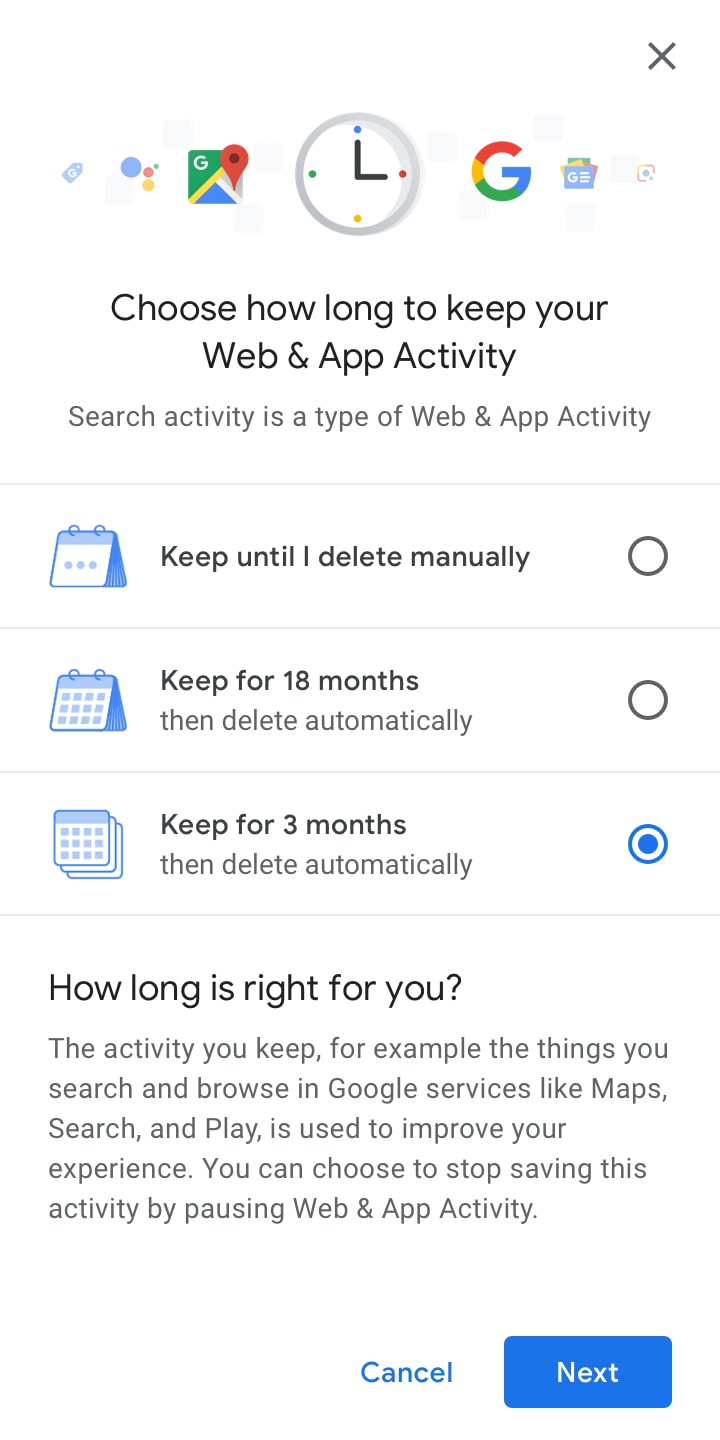
Today, Google announced it is rolling out a new privacy option when it comes to managing tracked activity data. In the coming weeks, you’ll be able to tell Google to automatically delete your data after a certain time period.

Currently, you can go in and manually delete your activity data at any time. Going forward, you can instruct Google to auto-delete your data every three months or every 18 months — or continue to delete it yourself whenever you wish.

When the new feature rolls out it will delete your location history and web and app activity. Google will introduce similar auto-delete functionality for other tracked user data in the future.

Check out the screenshot below which gives you an idea of how the new feature works:

Google

Editor's Pick

Google uses location history and web data to both make things more convenient for the user as well as give more power to advertisers. An example of Google’s use for your location history is to suggest restaurants it thinks you’ll like based on your previous restaurant visits. The reason advertisers like this is fairly self-explanatory.

It’s possible Google is rolling this out in response to tighter general restrictions by the European Commission, which recently instituted the GDPR. By giving users an easy way to auto-delete history, it will make users feel their data isn’t being hoarded while still giving Google at least 90 days of information on any particular user — which should be more than enough for its purposes.

You’ll be able to change these settings in the coming weeks.

NEXT: After 18 years at Google and Alphabet, former Google CEO Eric Schmidt is stepping down


from Android Authority http://bit.ly/2ISKaWU

http://bit.ly/2d4kg1q

Android Automotive OS in Polestar 2 Google

Google I/O 2019 is less than a week away, but that is not stopping the Silicon Valley company from giving us a peek into what’s to come. First up, Google plans to open up media app development for the Android Automotive OS.

We have seen tidbits of the Automotive OS for over a year, with several cars running a beta version of the firmware at last year’s developer conference. With vehicles such as the Polestar 2 coming to market soon, Google is finally getting developers ready for the new platform.

To do this, Google is expanding the Android Auto framework to help developers work with a variety of screen sizes, input methods, OEM customizations, and regional driver safety guidelines.


Android Automotive OS Media App UX Google

Just like with Android Auto as we know it, Google will soon allow developers to create apps that go beyond media consumption. The search giant has not announced when it will open these areas up, but it has plans to enable navigation and communication app development soon.

Google will spend a decent amount of time at I/O ’19 helping developers build apps for this new automotive environment. In addition to hosting a “How to build Android apps for cars” session at the developer conference, the Android Automotive team will be hosting office hours and app reviews.

Developers at I/O 2019 can then beta test their apps on reference units like the one seen below at the festival’s codelabs area.

Android Automotive OS Reference Unit Google

You can read Google’s full announcement here. Developers interested in developing for Android Automotive OS can join the new Google Groups community and StackOverflow.


from Android Authority http://bit.ly/2H1wGoz

http://bit.ly/2d4kg1q

Photo of the speculated Google Pixel 3 Lite/Pixel 3 XL Lite held in a hand with the screen turned on. Rozetked

Update, May 1, 2019 (12:15 PM ET): As excitement ramps up for Google I/O 2019, we now have leaked box art for the Pixel 3a and 3a XL as well as some hints about the India launch. Read below for more!


Original article, February 8, 2019 (10:30 AM ET): While there has been speculation for years about Google launching more affordable versions of its high-end Pixel smartphones, it appears the company is now actively developing two such handsets, and they could launch soon. These phones will reportedly be branded the Google Pixel 3 Lite and Google Pixel 3 XL Lite, or the Google Pixel 3a and 3a XL (we use both throughout this article), and are tipped to include the same great camera hardware as the standard Pixel 3 phones.

Editor's Pick

Here’s a look at everything we know so far about the Google Pixel 3a and Pixel 3a XL. Keep in mind that Google has not confirmed it is even working on these phones, so treat these rumors with caution. We will update this article as more reliable reports about these phones are published.

Google Pixel 3a and Pixel 3a XL: Release date and price

Photo of the backside of a blue Google Pixel 3 Lite Rozetked

In February, the Federal Communications Commission (FCC) listed two unannounced Google phones with model numbers G020C and G020G: these are likely to be the Pixel 3 Lite and Pixel 3 XL Lite.

Meanwhile, news from Android Police in December suggested these phones would launch sometime this spring — a claim that has some clout, according to a later 9to5Google story.

On April 15, Google posted a teaser image that heavily suggests we’ll see the Google Pixel 3a and 3a XL debut at Google I/O 2019 during the keynote address. If this is true, we’ll get our first official look at the devices on May 7.

We once again saw that May 7 date on renders that serial tipster Evan Blass leaked April 24. In the renders, the Pixel 3a shows May 7 as the date. That’s not confirmation that Google will announce the new Pixel phones May 7, but that’s twice that we’ve seen the same date.

Additionally, we have an official teaser from Google on Flipkart that strongly suggests the Pixel 3a lineup will land in India on May 8. Considering the Google keynote address in California at I/O 2019 starts at 10:30 PM India time on May 7, a May 8 release date makes sense.

Android Police also claimed, like all the previous Pixel phones, the Lite handsets will be sold through Verizon Wireless in the U.S. However, at this stage, it’s not clear if Verizon will be the exclusive U.S. carrier, as it has been for all the previous Pixel phone launches. There’s a very credible rumor that T-Mobile will also sell the Pixel 3a lineup.

It’s also very likely Google itself will sell both phones as unlocked devices directly from the Google Store and from its Google Fi network.

There’s been no official word on what the prices will be like for the Pixel 3a and Pixel 3a XL, although the Russian site Rozetked claims the cost will be between $400 and $500. Meanwhile, leaked pricing (via Android Police) corroborates that estimate and suggests the Pixel 3a will cost $399 and the 3a XL will cost $479 in the U.S.

Keep in mind the standard Google Pixel 3 starts at $799, so we can expect the Lite models to be much less than that when they are first introduced.

Google Pixel 3a and Pixel 3a XL: Hardware specs

Photo of the speculated Google Pixel 3 Lite/Pixel 3 XL with 3.5mm audio cable connected to the headphone jack. Rozetked

According to Rozetked, which first leaked images of an alleged Google Pixel 3 Lite prototype in November 2018, the standard version will have a 5.56-inch IPS LCD display, with a 2,220 x 1,080 resolution. Leaked images of the prototype also show no notch on the display.

A reliable 9to5Google source also indicated the display would be 5.6 inches at a resolution of 2,220 × 1,080 (440dpi) but suggested it would be an OLED panel rather than LCD. LCD was previously suspected to be utilized as a cost-cutting measure.

Both 9to5Google and Rozetked suggest the Google Pixel 3a will have an octa-core Qualcomm Snapdragon 670 chipset — a downgrade compared to the much faster Snapdragon 845 chip found on the current Pixel 3 devices — and 4GB of RAM (the same as the standard Pixel 3 phones). However, the internal storage has allegedly been reduced to 32GB for the Lite models as opposed to the 64GB and 128GB storage amounts on the current Pixel 3 models, said Rozetked. 9to5Google‘s Stephen Hall seems to disagree, suggesting on Twitter there would only be 64GB Pixel 3a and 3a XL models. WinFuture also backs up this claim.

In April, 9to5Google spotted listings for two new phones on the Google Play Developer Console which back up some of these rumors. According to those listings, the “3a” naming scheme will be utilized for these new phones and they will both come with 4GB of RAM and screen resolutions of 2,160 x 1,080 for the 3a and 2,220 x 1,080 for the 3a XL.

As for the Pixel 3a battery size, this is said to be either 2,915mAh or 3,000maAh, according to the rumors.

On May 1, a leak of what appears to be the box art for the Pixel 3a corroborated many of these spec rumors (via This is Tech Today):

This Is Tech Today

Editor's Pick

The most interesting thing about the Pixel 3a reports is that the camera hardware is said to be almost exactly the same as what’s found on the current Pixel 3 phones. The rumors claim it will have the same 12MP single rear camera and just one 8MP front-facing camera. That selfie camera will still have the same specs as the Pixel 3’s front camera, which has two of those same sensors. 9to5Google suggests the Pixel 3a camera app will have poorer performance (perhaps owing to the weaker processor), despite equal image quality, though.

If these reports are indeed accurate, that could be the biggest selling point of the Lite versions, as consumers would not have to pay a ton of money to get almost the same great camera experience.

Google Pixel 3 Lite photo sample of a road in dayligh conditions. Rozetked

Google Pixel 3 Lite photo sample of a bowl with oranges in indoor poor light conditions Rozetked

Rozetked also posted photo samples taken with the Pixel 3 Lite prototype. One shows an outdoor scene on a winter road in the daytime, while the other is supposed to be an example of the camera’s portrait mode, with images of fruit. Unfortunately, we didn’t get to see any comparison images with a standard Pixel 3 camera. The samples also didn’t include an example of how the Lite camera could handle the Pixel 3’s Night Sight mode, which offers great photos in low-light conditions.

Photo of the headphone jack on the new Google Pixel 3 Lite and Pixel 3 XL Rozetked

There’s isn’t a lot of information on the Pixel 3a XL yet, although it’s likely that it could share some of the same specs as its smaller model, including the same processor, memory, storage and camera options. This phone would likely have a 6-inch display and a Full HD+ resolution, and we can expect a bigger battery than the standard model too, given the larger body. 91Mobiles and OnLeaks have previously posted what they claim are renders of the Pixel 3 XL Lite.

It’s pretty much a given that both devices will launch with Android 9 Pie.

Google Pixel 3a and Pixel 3a XL: Design

One of the biggest design differences we expect for the Google Pixel 3a and 3a XL is that the devices will be made of plastic rather than the all-glass materials of the main Pixel 3 line. This is likely a cost-cutting measure.

From rumors leaked by WinFuture, we also expect the Lite devices to come in the traditional black color and white color that the main Pixel 3 line does. However, there could be a color called “Iris,” which would likely be a purple or blue color to match the flower of the same name.

One small but important difference between the Pixel 3 Lite and the Pixel 3 is that it reportedly includes an old fashioned 3.5mm headphone jack on top. This will likely please a lot of folks who want to keep using their wired headphones and earbuds. On the downside, the phone is not supposed to have the dual front-facing speakers found on the current Pixel 3 phones, as the earpiece also serves as its single speaker.

On April 18, Android Headlines revealed what it claims are official renders of both the Pixel 3a and Pixel 3a XL. You can see those render below:

Alleged official renders of the Google Pixel 3 a and Google Pixel 3a XL. Android Headlines

It’s hard to tell, but the 3a is on the left and the 3a XL is on the right. If you look closely, you can see that the 3a is slightly thinner than the 3a XL.

Serial tipster Evan Blass gave us clearer looks at the Pixel 3a and 3a XL on April 24 and 25. The renders even show off the Pixel 3a in a new purple color and with a highlighter green power button. You can check out the renders below.

Google Pixel 3a and Pixel 3a XL: Who are these phones for?

The back of the Google Pixel 3 Lite. Andro News

The biggest question surrounding the Google Pixel 3a and Pixel 3a XL may not be their hardware specs, their release dates, or their prices. Indeed, the big question about these phones may be who is the audience for these devices. If Google does launch these phones in May, they will be the first mid-range handsets from the company since it released the Nexus 5X way back in 2015.

One group of consumers who might be the target of the Pixel 3 Lite are people who have read reviews of the Pixel 3’s superior camera hardware but don’t want to pay a ton of money to get the phone itself. Using lower-end materials and hardware specs while also keeping most of the camera specs intact on the Pixel 3 Lite could get more people to check out Google’s products.

It’s also possible Google wants to see Pixel phones sold in more countries, particularly markets like India where cheaper phones are more popular. Offering the Google Pixel 3a in those countries could be a good move, as reasonably-priced phones with good cameras may stand out among other mid-range handsets.

If you have any other information regarding the Pixel 3 Lite or Pixel 3 XL Lite, tip us!

NEXT: Did the Celeron version of the Google Pixel Slate go to tablet purgatory?


from Android Authority http://bit.ly/2tkufXD
http://bit.ly/2d4kg1q

South Korean electronics giant LG just posted its earnings report for the first quarter of 2019. Although the company’s home appliance division saw record growth as compared to this time last year, its mobile division continues to lose the company huge amounts of money.

LG reported mobile division sales of 1.51 trillion South Korean won (~$1.34 billion) with a quarterly operating loss of 203.5 billion KRW (~$181.05 million). Although this represents a slight improvement as compared to the previous quarter (Q4 2018), the division is still bleeding cash and showing no growth.

Editor's Pick

Previously, LG’s other divisions have been able to prop up the loss-leading mobile sector, but now things are getting to the point where even that is not possible. At this point, LG’s overall business is sagging under the dead weight of its mobile division, which has been in the red now for nine straight quarters.

In LG’s press release for the news, the company specifically mentions the upcoming LG V50 ThinQ, which will be the first 5G device from the manufacturer and only one of a handful of 5G devices on the market. After the mediocre reviews for the LG G8 ThinQ, LG makes it clear that it has a lot riding on the V50.

The press release also highlights LG’s cost-cutting measure of moving mobile production from South Korea to its plant in Vietnam.

We’ll have to wait for the next quarterly results to see if these strategies pan out for LG. Hopefully, something works for the company soon, as it won’t be able to sustain losses like this for long.

NEXT: LG G8 ThinQ camera review: Average all around

Affiliate disclosure: We may receive compensation in connection with your purchase of products via links on this page. The compensation received will never influence the content, topics or posts made in this blog. See our disclosure policy for more details.


from Android Authority http://bit.ly/2GVarll

http://bit.ly/2d4kg1q

google wear os tiles demo on fossil sport

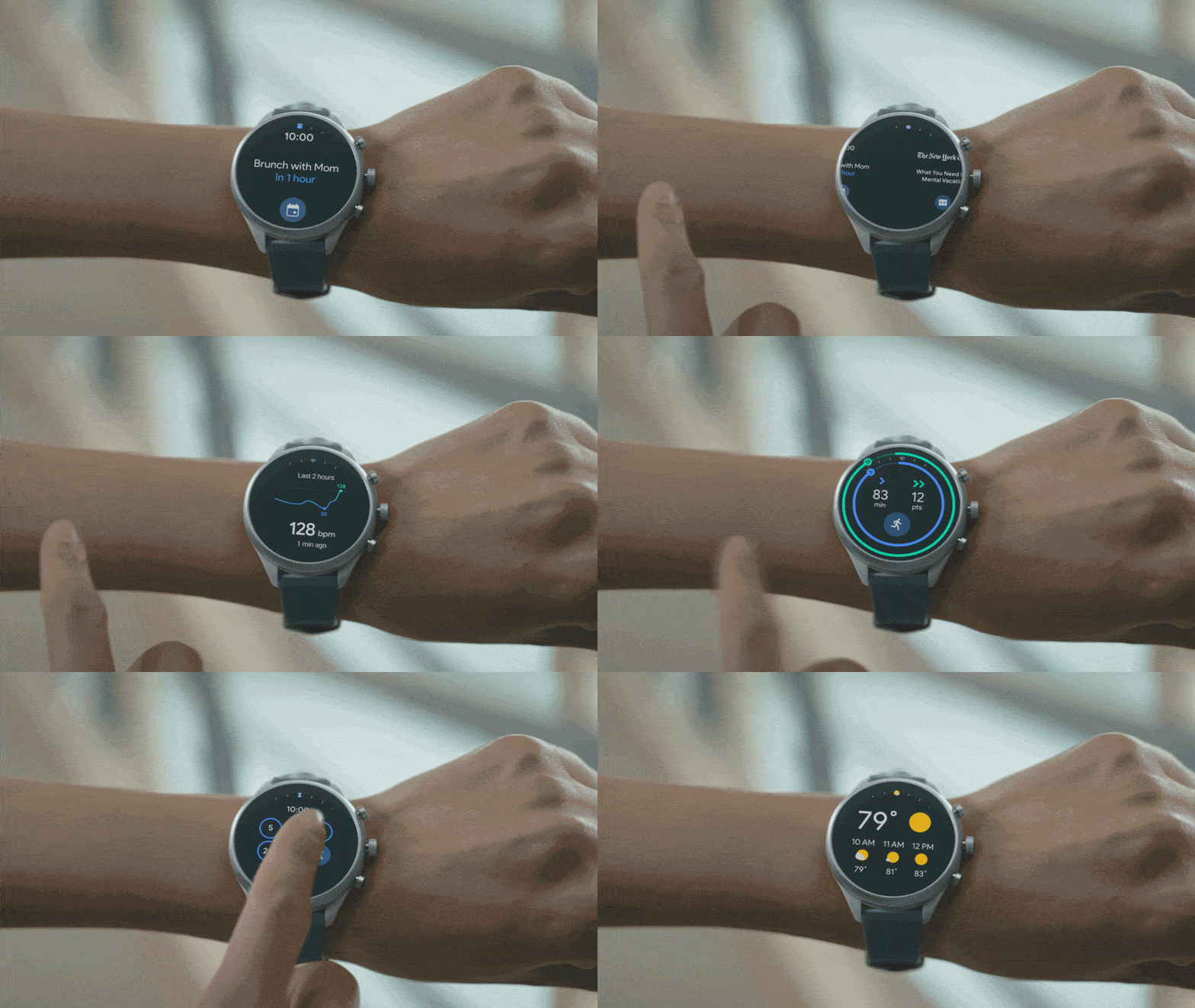
Wear OS has gone through many iterations — including a name change — since its launch, the most drastic of which rolled out in September 2018. Google isn’t trying to reinvent the wheel with the launch of its new Tiles feature, but it does hope to make navigating around the smartwatch OS a little easier.

Further reading

A big gripe with navigating around Wear OS is if you want to launch an app that’s not the Google Assistant or Google Fit, you need you open the app drawer, scroll down to your app, and tap on it. This can be tedious on a smartwatch. Now, Google is adding something called Tiles that will give you swipeable access to the features most important to you.

Google is introducing six Tiles to Wear OS at the start: goals, next event, forecast, heart rate, headlines, and timer. Once the Tiles are added to your watch, a swipe left will allow you to scroll through each one for quick access to the information in each app. So, instead of navigating to your app drawer and manually launching the Timer app, a simple swipe over to the Tile is all you need.

Google says more Wear OS Tiles will be added in the future.

It’s pretty easy to add and rearrange Tiles on your smartwatch — just tap and hold a Tile to move it around, or tap and drag one inside the Wear OS app.

The Tiles feature will roll out to Wear OS devices over the next month, but Google notes that “certain features will vary by phone OS, watch, or country.”

We haven’t had the chance to try out Tiles yet, but the feature will be on display in the Android Sandbox at Google I/O 2019Android Authority will be in Mountain View covering the developer conference May 7-9, so stay tuned for more Google coverage.

Next: Google I/O 2019: What to expect


from Android Authority http://bit.ly/2vw27C3

https://ift.tt/2d4kg1q

No matter what kind of business or side hustle you have, having a website helps you reach more people, build trust, and drive sales. For en...